POMA Coffee Research is an independent coffee research and cultivation company based in Copenhagen, Denmark. Through climate-controlled research in Denmark and field trials with partner farms around the world, we develop practical cultivation methods that improve coffee production under changing environmental conditions.

Bridging research and cultivation.
Our mission is to refine coffee production techniques, address industry challenges and bridge the gap between research and practical application.
By combining controlled experimentation with on-farm implementation, we develop cultivation methods that improve resilience, productivity and cup quality while helping producers adapt to the changing conditions facing coffee agriculture.
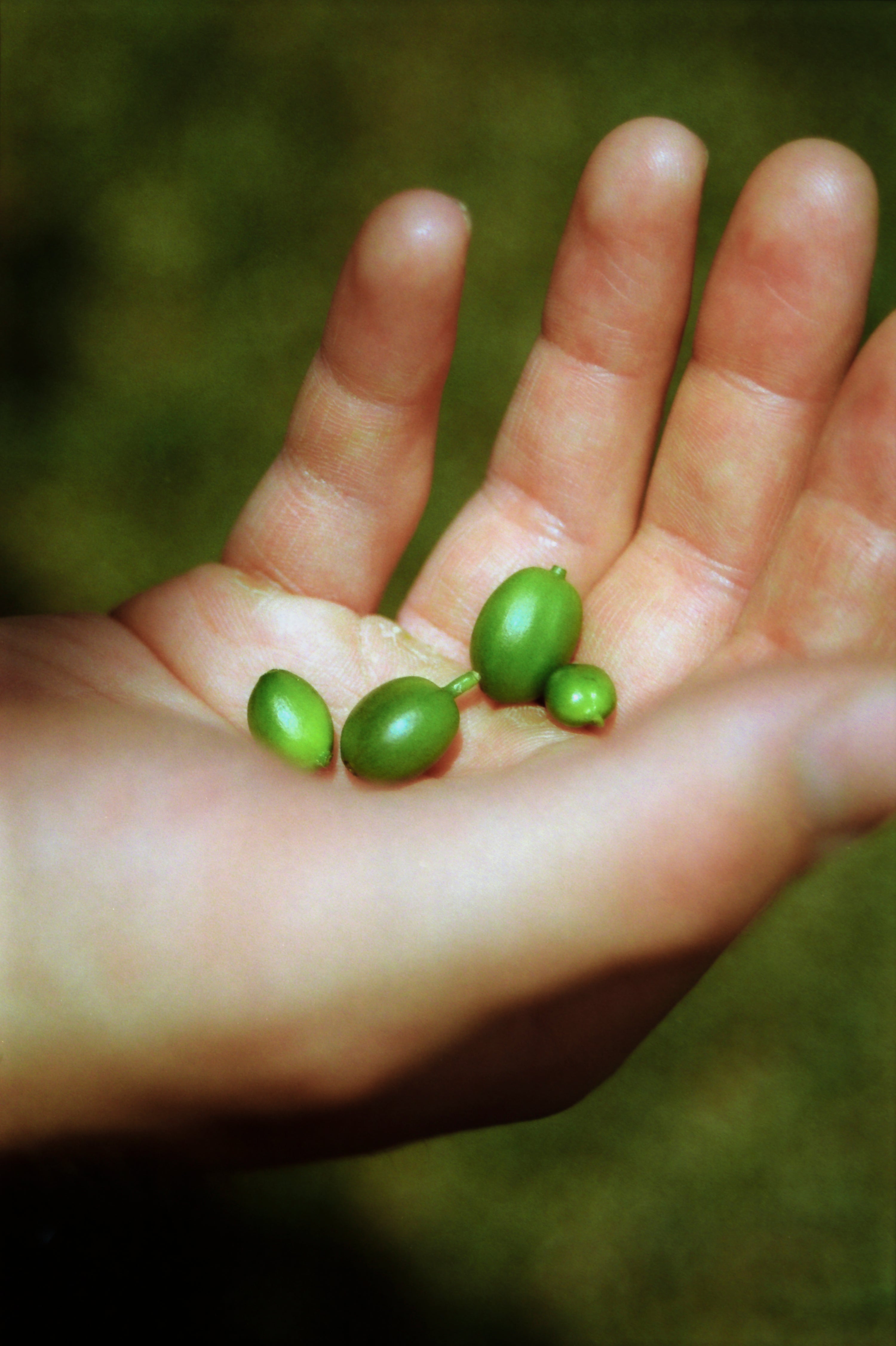
Coffee Research
Our research division investigates the biological and environmental factors that shape coffee cultivation. Through climate-controlled greenhouse trials, international field studies and close collaboration with partner farms, we develop practical cultivation methods that improve resilience, productivity and cup quality. This work also includes agronomic advisory services, research partnerships, grant-funded projects and scientific publication.
Coffee Experience
Our coffee experience division translates research into tangible experiences. We roast and distribute coffees produced through our research network, develop experiment boxes that communicate ongoing trials, and offer wholesale partnerships, greenhouse visits and educational experiences that connect people directly with the science behind the cup.

Research designed for practical application.
Every project begins with observation, progresses through controlled experimentation and concludes with validation under commercial farming conditions.
Our objective is not only to generate knowledge, but to develop cultivation methods that producers can implement under real-world conditions.
Where to experience POMA
POMA coffees are served by a small network of cafés, bakeries, restaurants and retailers around the world.
As many coffees are produced in limited quantities, availability may vary by location and season.HART Bakery, Copenhagen
Koffee Mameya, Tokyo
Democratic Coffee, Copenhagen
Darcy's Kaffe, Copenhagen
A Sense of Place, Amsterdam
Søly, Vedbæk
Cranks & Coffee, Klampenborg
Sommer Canteen, Taarbæk
LOCAL, UAE
Hagen, London
PLAY, Los Angeles
Restaurant Alchemist, Copenhagen
Get in touch
For general inquiries, partnerships and wholesale applications, please visit our Contact page. For research collaborations and advisory services:
Contact:
rama@pomacoffee.com
-
Read more: Spray Deposition Quality in Coffee Production

Spray Deposition Quality in Coffee Production
Foliar spraying is one of the most universally practised agronomic interventions in coffee production, yet the quality of spray deposition remains...Read more -
Read more: Hidden Reproductive Limitations in Coffee

Hidden Reproductive Limitations in Coffee
There's a common frustration among coffee farmers and agronomists. Trees look healthy, flowering is abundant, and yet the harvest disappoints. Yi...Read more -
Read more: Fruit Pigmentation Experiment

Fruit Pigmentation Experiment
At POMA, we're continually exploring the factors that influence the sensory profile and overall quality of coffee. In this controlled experiment,...Read more


