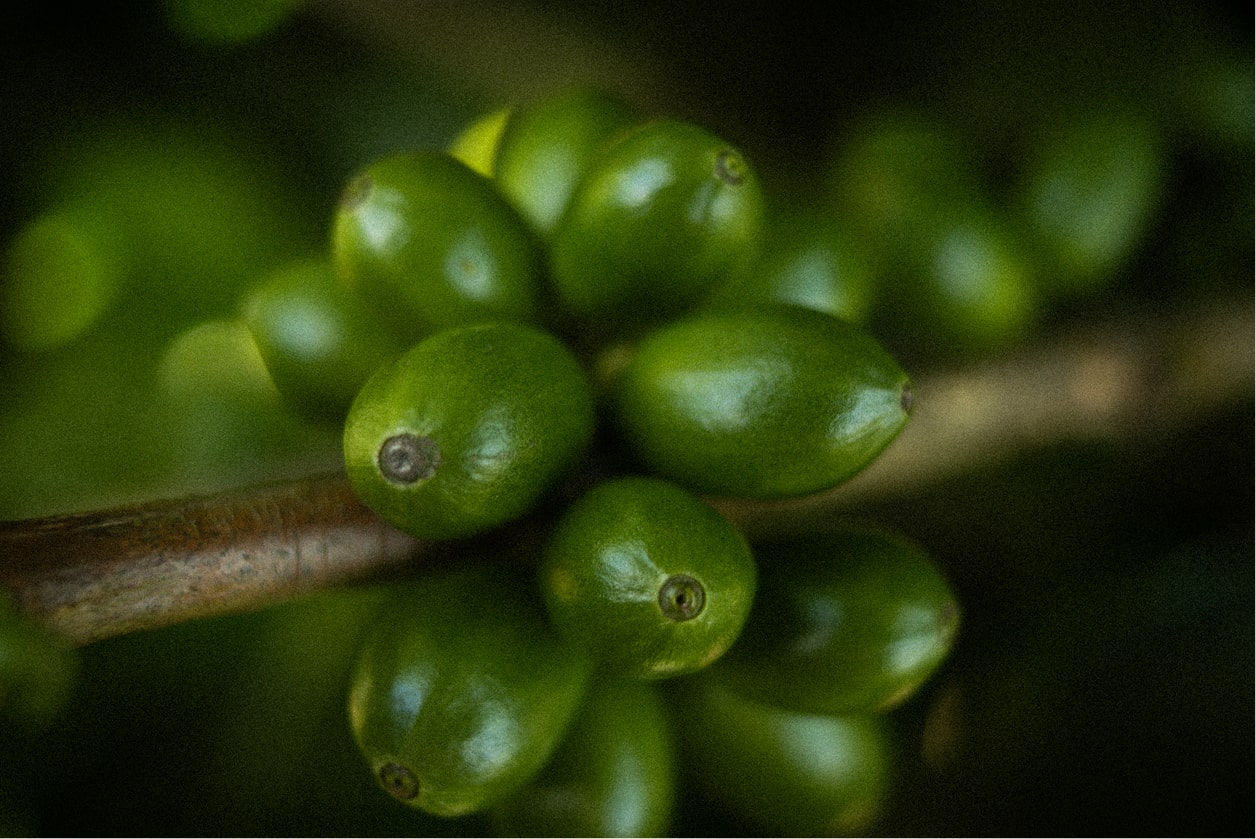
Cold Washed Geisha
Introducing our latest release - a Cold Washed Geisha pushed to the limit. Cultivated at the Poma Research Station, this lot represents our ongoing pursuit to understand, and expand, the boundaries of coffee quality.
What happens when Geisha is given idealised growing conditions free from environmental stress? We are learning how far density and aroma complexity can be pushed—how far the variety can go when its environment is precisely and deliberately shaped. After harvest, the cherries undergo our signature cold washed process—a method designed to preserve inherent aromas shaped by the variety and the environment, enhance articulation, and protect the delicate florality Geisha is known for.
Expect a cup that is clean, intensely expressive, and structurally wild, showcasing the unique crossing between a world-famous variety and a distinctly designed terroir.
What’s in the box
Cold Washed Geisha
- Coffee will be roasted on December 2nd and ship the following day
- DHL Express within 1-3 days from Denmark
Research Rarities Collection
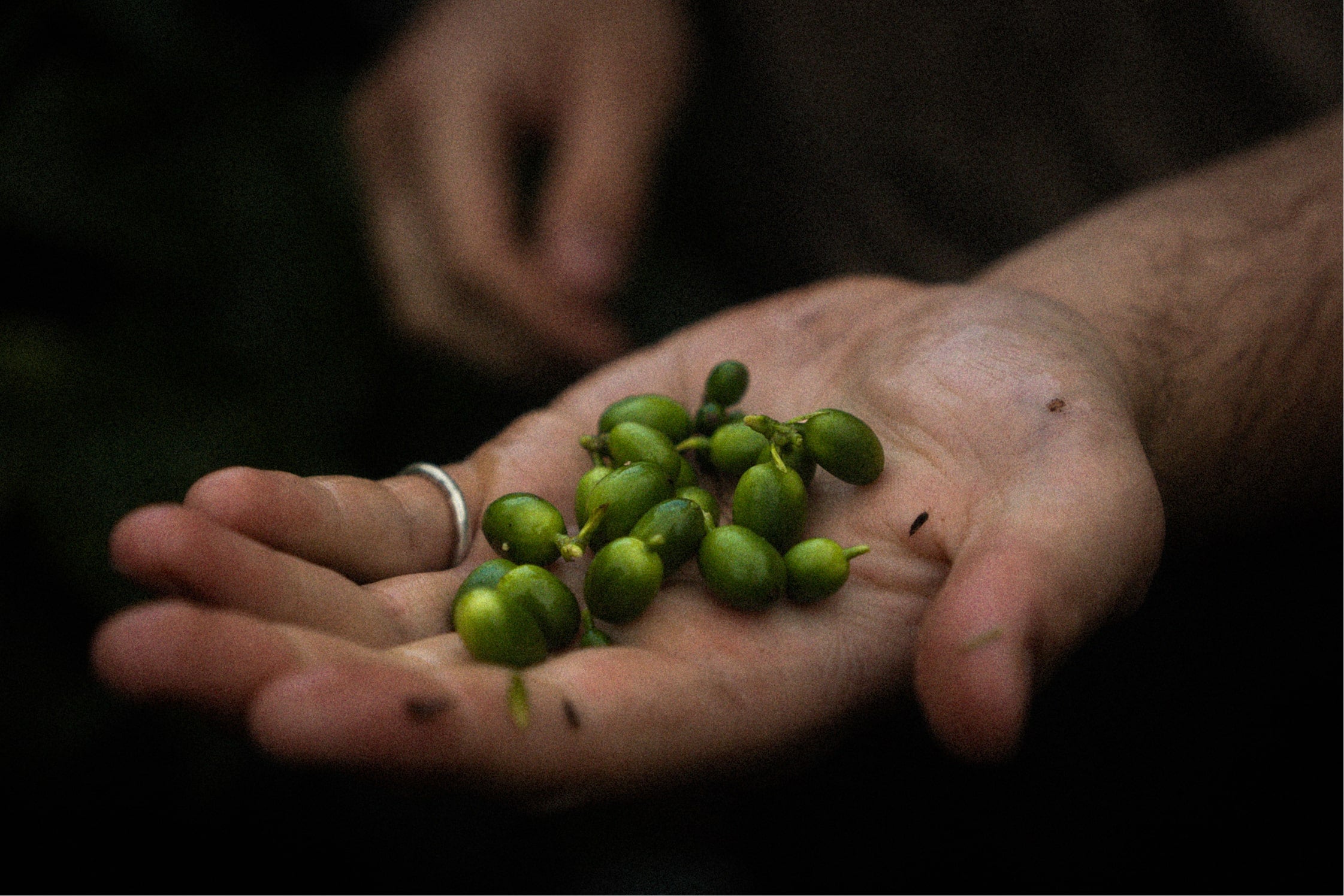
The Research Rarities Collection represents a curated selection of exclusive, seasonally released coffees originating from our research program. Each offering reflects explorations of pioneering cultivation techniques and innovative drying processes. Developed in close collaboration with some of the best coffee growers in the world and industry experts, these limited-edition coffees exemplify our ongoing commitment to excellence, agricultural sustainability, and innovation within the field. Through this collection, we provide consumers with a rare opportunity to experience the forefront of coffee development.

Geisha Variety
Geisha (also Gesha; Panama-accession line, syn. Geisha 1931) is a distinct Ethiopian landrace-derived cultivar of Coffea arabica, originally collected in 1931 from wild populations near the town of Gesha in southwestern Ethiopia by British consular agents and subsequently exported to Kenya, Tanzania, and finally Costa Rica (CATIE accession T2722) in the 1950s–1960s. Although the variety remained largely overlooked for decades, its breakthrough occurred in the early 2000s when a specific seed lot introduced from CATIE to the Peterson family’s Hacienda La Esmeralda in Boquete, Panama, produced coffees of extraordinary sensory distinction under high-altitude (1,600–2,000 m.a.s.l.), shaded, and meticulously processed conditions. Genetically closely related to ancient Ethiopian wild accessions and exhibiting minimal introgression from Bourbon-Typica groups, the Panama Geisha lineage is characterized by exceptionally elongated internodes and beans, low-to-moderate yield, and heightened sensitivity to Coffee Leaf Rust in non-optimal environments; nevertheless, it commands premium status due to its hallmark cup profile of intense bergamot-like floral aroma, jasmine, stone-fruit complexity (peach, apricot), vibrant yet refined malic and phosphoric acidity, and pronounced tea-like body when fermented anaerobically or via extended washed protocols. The Costa Rican-derived Panama Geisha strain—now propagated worldwide in suitable microclimates—has redefined specialty coffee economics and remains the benchmark for exotic, terroir-expressive Arabica cultivars.agricultural sustainability, and innovation within the field. Through this collection, we provide consumers with a rare opportunity to experience the forefront of coffee development.

Cold Washed Process
The coffee cherries were subjected to an initial cold storage period of 48 hours at 8°C. This gentle chilling process preserves and intensifies the coffee’s aromas without inducing fermentation, thereby safeguarding its natural taste profile. Subsequently, the cherries were depulped and underwent thorough washing and drying at low temperatures in a pressurized, rotating tumble dryer. This meticulous drying procedure ensures uniformity, resulting in a clean and crisp final product.

Poma Research Station
Our Coffee Research Station was established six years ago in a climate-controlled greenhouse in Fyn, Denmark. Within this greenhouse, we manipulate environmental factors based on algorithms that mimic plant processes. This allows us to study how coffee trees react to climate change while also maintaining a stable environment for investigating the impact of farming practices.
Technical Data
Producer: POMA
Origin: POMA Research Station
Altitude: 2000 masl (simulated)
Variety: Geisha
Process: Cold Washed
Harvest: August 2025
Brewing Advice
Rested coffee
We recommend resting our coffees for at least 10 days after the roast date, and we often find our coffee the most expressive around 3 weeks.
Water
To prepare, simply add 3.0g of the mineral concentrate to every 1 litre of high-quality demineralised water, then give it a good shake. This curated mixture will result in a mineral concentration of 90 parts per million (ppm) of perfectly balanced mineral compositions, optimising the brewing conditions for an exceptional coffee experience.
Brewing Parameters
We recommend using 13 grams of coffees to 200 grams of water. A coarse grind size approximately 900 micron. Brewing temperature 92C. Our brewing pattern is a 50g circular pour every 40 seconds. Total brew time is 3:00.